
Neck Pain Shouldn’t Control Your Life

No twisting. No popping. No cracking.
Serving West Texas Since 1989
Answers Before Decisions
Symptoms That Can Accompany Neck Pain
Symptoms can include:
What Causes Neck Pain?
Poor Joint Movement
The joints of your neck are designed to move. Injury, repetitive stress, prolonged posture, degeneration, or previous trauma can change how those joints move and how surrounding muscles respond.
Previous Injuries
That car crash from 10 years ago may seem like ancient history. Your neck may disagree. Previous whiplash injuries, sports injuries, falls, and other trauma can sometimes contribute to neck problems years later.
Posture and Technology
Phones, tablets, laptops, and long hours at a computer can place the neck in sustained positions for hours every day. Your head is heavy. The farther it moves forward from its normal position, the harder the muscles of the neck and upper back have to work to support it.
Disc Problems
The discs between the vertebrae provide cushioning and help allow normal movement. Over time—or following injury—discs can degenerate, bulge, or herniate and may contribute to neck, shoulder, or arm symptoms.
Muscle Imbalance
People often say, “It’s probably just my muscles.” But muscles don’t operate independently. Nerves tell muscles when to contract, how strongly to contract, and how to coordinate movement. That’s one reason we look beyond the painful muscle itself.
Arthritis and Degenerative Changes
Degenerative changes become increasingly common as we age, but an X-ray showing arthritis doesn’t automatically tell us exactly why someone hurts. We’ve seen patients with considerable degeneration who function remarkably well—and others with relatively modest changes who are miserable. The entire clinical picture matters.
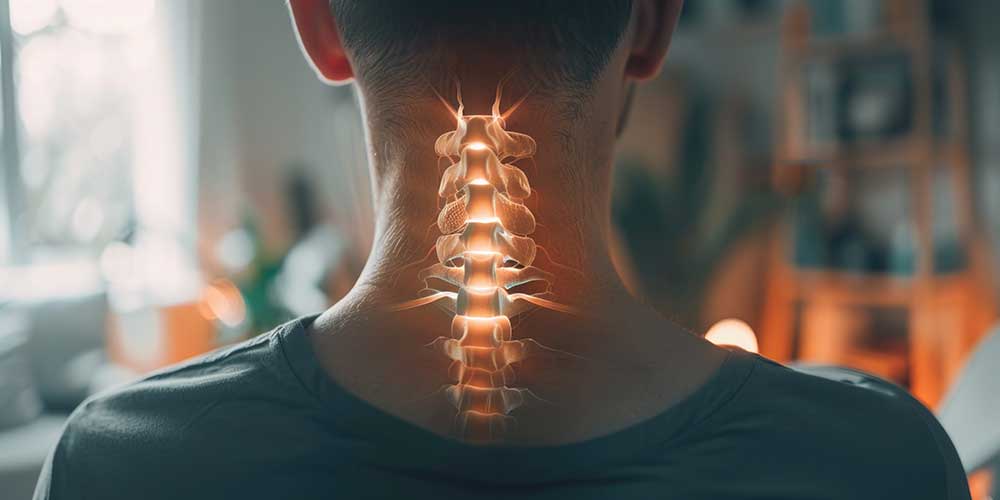
Your Neck Does More Than Hold Up Your Head
How We Evaluate Neck Pain
Your first visit begins with a free consultation.
Free Consultation
Honest Direction
Focused Evaluation
Clear Findings and Options
A Precise, Comfortable Approach
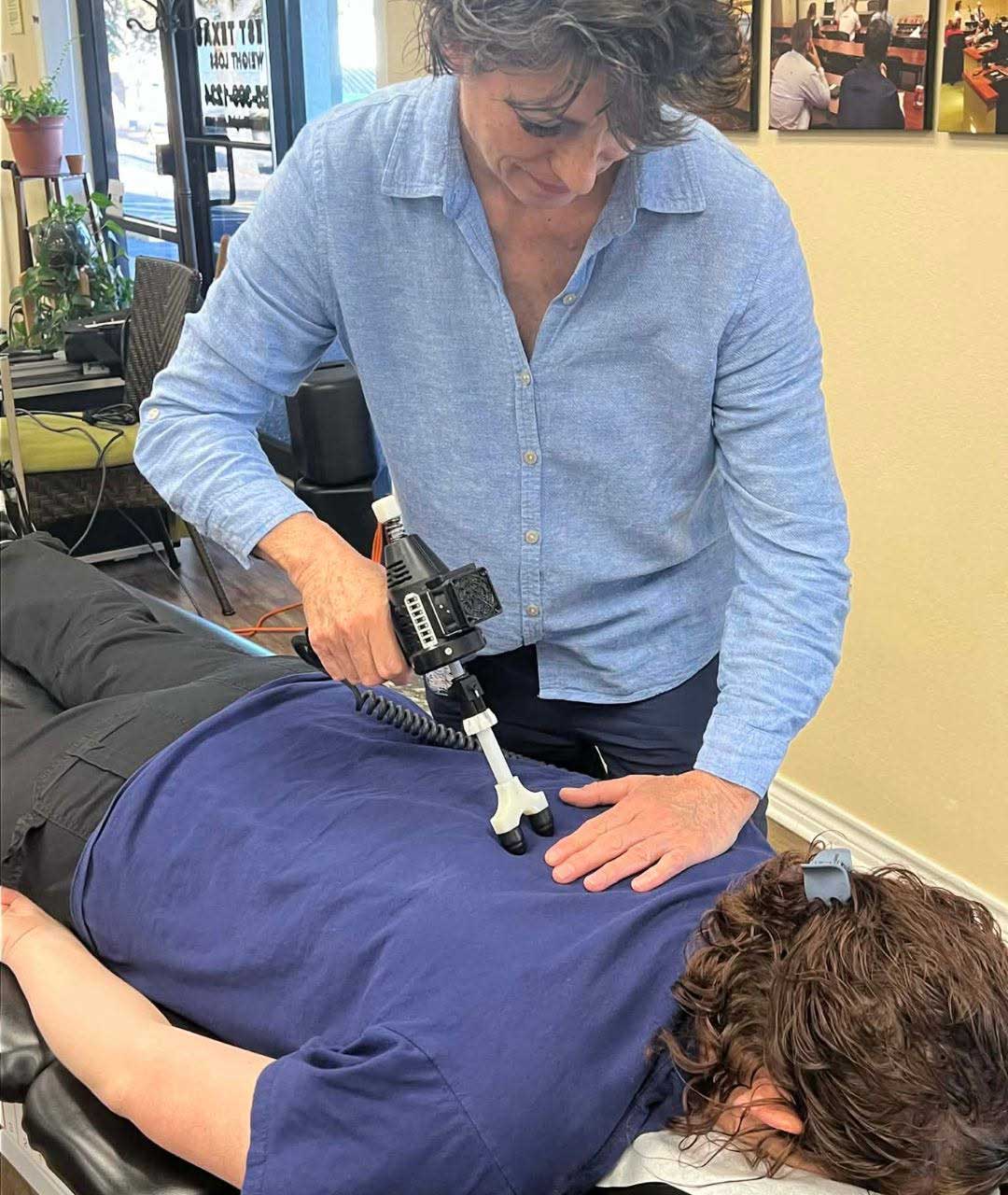
Chiropractic Without Twisting, Popping or Cracking
One of the first things many new patients tell us is:
“I don’t want anyone twisting my neck.”
We understand.
At Stotts Chiropractic, Dr. Stotts uses precision instrument-guided adjustments rather than traditional twisting, popping, or cracking techniques.
The instrument allows us to deliver a controlled adjustment to a specific area while you remain in a comfortable position.
There is no need to forcefully rotate your neck to perform the adjustment.
For patients who have avoided chiropractic care because they’re nervous about traditional neck manipulation, this can make the experience very different from what they imagined chiropractic care would be.
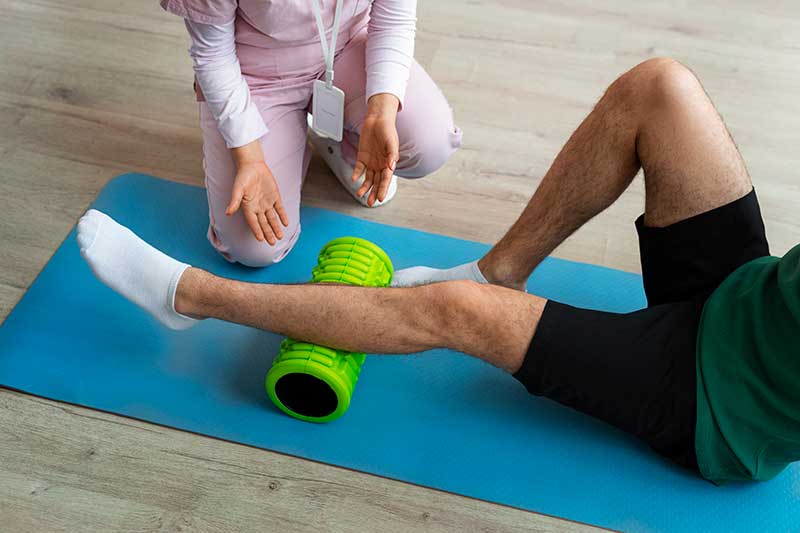
We Don’t Stop at the Adjustment
Correcting joint function may only be part of the picture.
When appropriate, your care may also incorporate rehabilitation designed to improve the way your nervous system and muscles work together.
Your nerves control your muscles.
When movement patterns have been altered by pain, injury, poor posture, or years of compensation, simply strengthening a muscle doesn’t necessarily address the entire problem.
Our rehabilitation approach is designed to help improve movement, stability, coordination, and the communication between the nervous system and the muscles supporting your spine.
The goal isn’t simply:
“Make it stop hurting today.”
We want to understand what contributed to the problem and help you reduce the likelihood of returning to the same cycle again.
Special Circumstances
What If I’ve Had Neck Pain for Years?
What If I’ve Had Neck Surgery?
Why San Angelo Patients Choose Stotts Chiropractic
Listen first.
Find the problem.
Explain what we find.
Use precise, comfortable techniques.
Give patients choices.
Neck Pain Frequently Asked Questions
Do you have to crack my neck?
No. Stotts Chiropractic uses precision instrument-guided adjusting techniques that do not require traditional twisting, popping, or cracking of the neck.
Will I need X-rays?
Not everyone does. X-rays are used when Dr. Stotts determines they are clinically appropriate and would provide useful information for evaluating your condition.
Can you help a herniated or bulging disc in the neck?
Disc problems can contribute to neck, shoulder, and arm symptoms. Whether chiropractic care is appropriate depends on the type and severity of the problem, your symptoms, examination findings, and other factors. We evaluate each patient individually.
What if my neck pain started after a car crash?
Whiplash and other neck injuries are common following motor vehicle crashes. Even relatively low-speed collisions can place significant forces on the neck. A history of a previous crash is important information when evaluating neck pain.
Can neck problems contribute to headaches?
They can. Certain headaches can originate from structures in the neck, particularly the upper cervical region. If headaches accompany your neck pain, be sure to tell us during your consultation.
Can neck problems cause dizziness?
There are many possible causes of dizziness, some of which require medical evaluation. The neck also provides important sensory information involved in balance and spatial orientation. We evaluate the complete clinical picture rather than assuming dizziness is coming from the neck.
I’ve had neck pain for years. Is it too late?
Not necessarily. The duration of your symptoms is only one part of the picture. The first step is determining what may be contributing to your symptoms now and whether we believe our approach is appropriate.